
A clearer operational view of the connected building.
Building monitoring brings relevant system status, alarms, trends and performance information together so authorised teams can understand what is happening and where attention may be required.
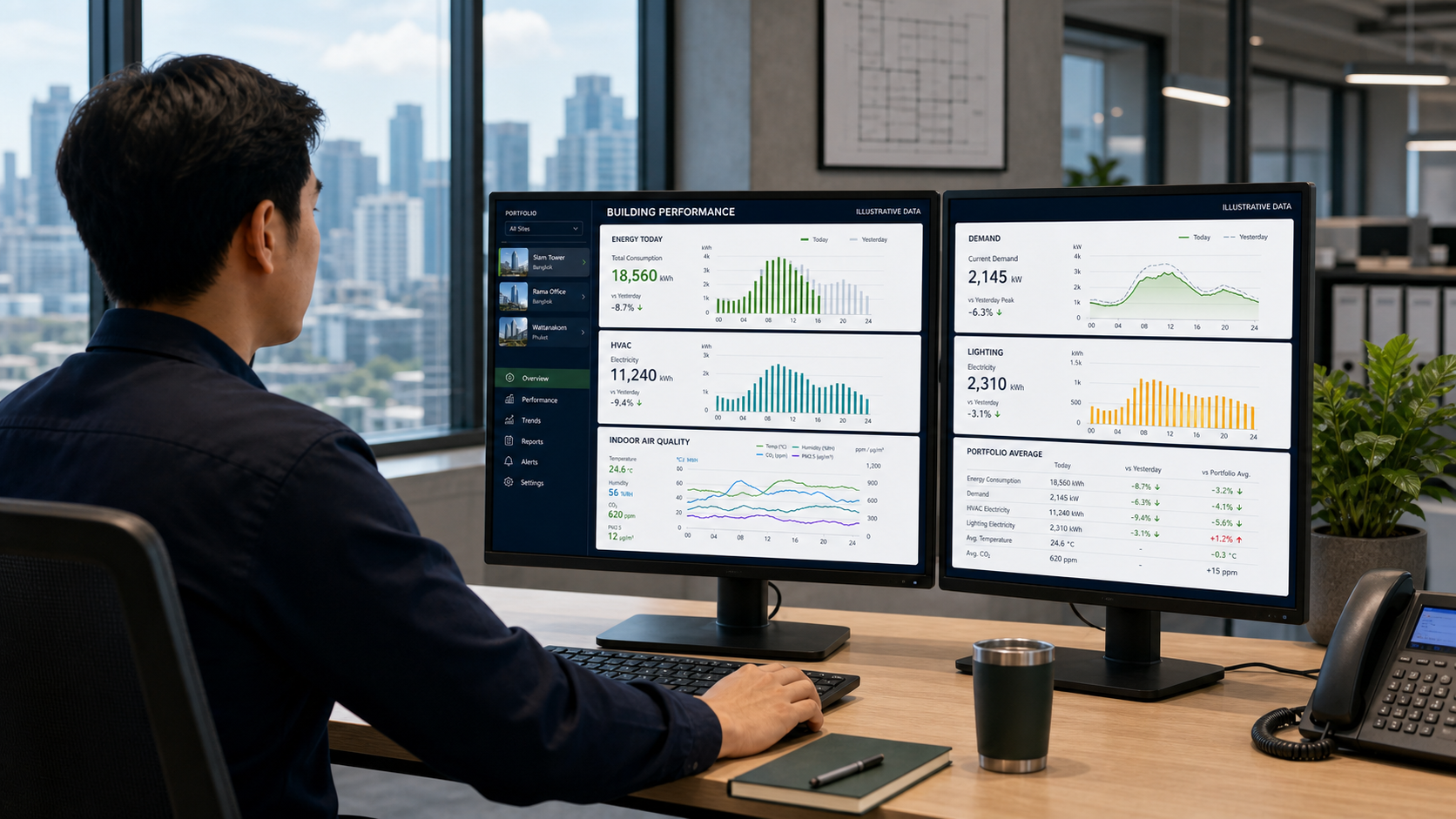
Operators need useful information—not more noise.
Connected buildings can produce large amounts of status and performance information. Effective monitoring identifies what is operationally relevant, presents it clearly and directs attention toward conditions that require review or action.
Good monitoring creates clarity. It does not simply display everything.
Six coordinated monitoring functions.
System status
Present the current operating state of relevant building systems and equipment.
Alarm management
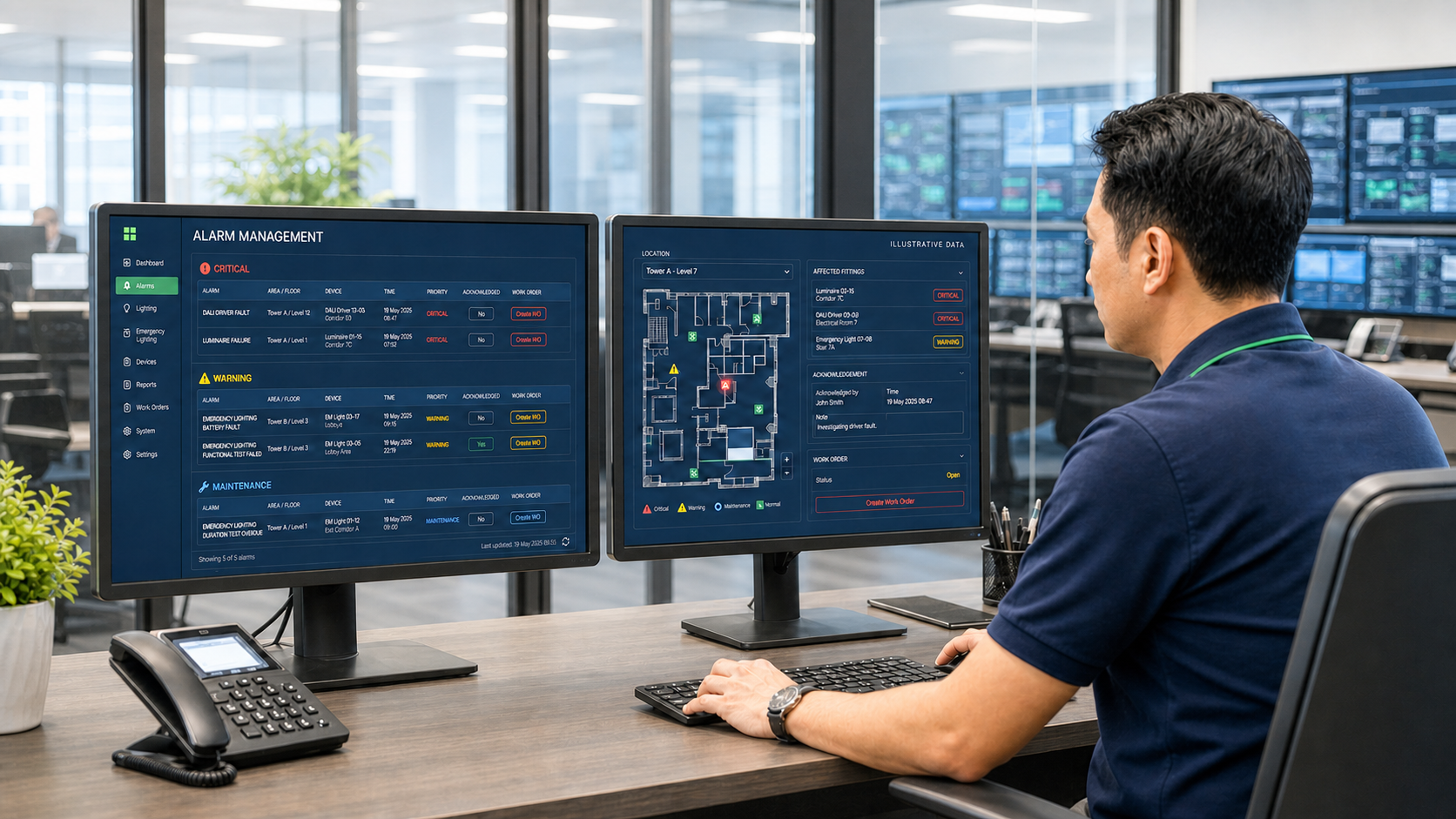
Identify, classify and present conditions that require authorised review or action.
Trends and history
Record suitable operational values over time to support investigation and performance review, including across multiple buildings or building sites.
Dashboards and visualisation
Organise relevant information into clear views suited to different operational roles.
Reports and notifications
Provide authorised teams with useful summaries and notifications according to defined responsibilities.
Remote operational visibility
Allow authorised users to review relevant building information from approved locations and devices.
Different users require different levels of information.
Building operators
Current status, operating modes, schedules, alarms and authorised control functions.
Facility managers
Performance summaries, recurring issues, operational trends and resource priorities.
Maintenance teams
Equipment conditions, fault history and information supporting investigation and maintenance planning.
Building owners and management
Concise performance information supporting strategic and operational decisions.
An alarm should communicate what matters and who should respond.
Too many poorly defined alarms can hide important conditions. The project should establish alarm priorities, useful descriptions, escalation responsibilities, acknowledgement procedures and the information required for investigation.
Building monitoring supports operational awareness. It does not replace certified fire, life-safety or security alarm systems, which remain independent and subject to their own requirements.
Historical information helps explain how the building behaves.
Trends can reveal recurring conditions, schedule problems, unusual changes and relationships between building functions. Where project scope and available data permit, Digital Twin models may provide additional context for comparison, simulation and deeper performance analysis.
Operational information can help maintenance become more focused.
Fault history, operating hours, equipment status and recurring conditions can support investigation and maintenance planning. Monitoring can indicate where attention may be required, but qualified personnel must determine the appropriate corrective action.
Identify
Recognise a condition requiring review.
Investigate
Examine relevant status, history and context.
Act and verify
Complete authorised work and confirm the result.
Connected visibility requires appropriate protection.
Monitoring interfaces may provide access to important operational information and, in some cases, authorised control functions. Access should therefore follow defined user roles, secure communication practices, appropriate network architecture and documented responsibility.
Monitoring becomes more valuable when information is coordinated.
Relevant information from lighting, climate control, occupancy, energy management and the building’s electrical-energy landscape can provide operators with a more coherent operational view.
Monitoring priorities vary by building environment.
Hospitality
Provide authorised hotel teams with relevant guest-room, public-area, operational and energy information.
Residential
Provide understandable system status and relevant notifications without unnecessary complexity or intrusion.
Commercial
Coordinate operational information across offices, tenant areas, shared facilities and building services.
Useful monitoring begins with clear operational requirements.
- Users, roles and operational responsibilities
- Relevant status, measurements and control points
- Alarm priorities, descriptions and escalation procedures
- Trend intervals, data quality and retention periods
- Dashboard structure and information hierarchy
- Network architecture, access and cybersecurity requirements
- Testing, documentation and operational handover
The monitoring strategy should be coordinated with the building owner, facility team, system designers, controls engineer, system integrator and information-technology representatives.
Planning a clearer operational view of your building?
Share the building systems, operational roles, monitoring priorities and reporting requirements with GreenControls.