
The right light-control for every space, activity and moment.
Intelligent lighting control adapts illumination to occupancy, available daylight, schedules and user requirements while keeping operation clear and flexible.
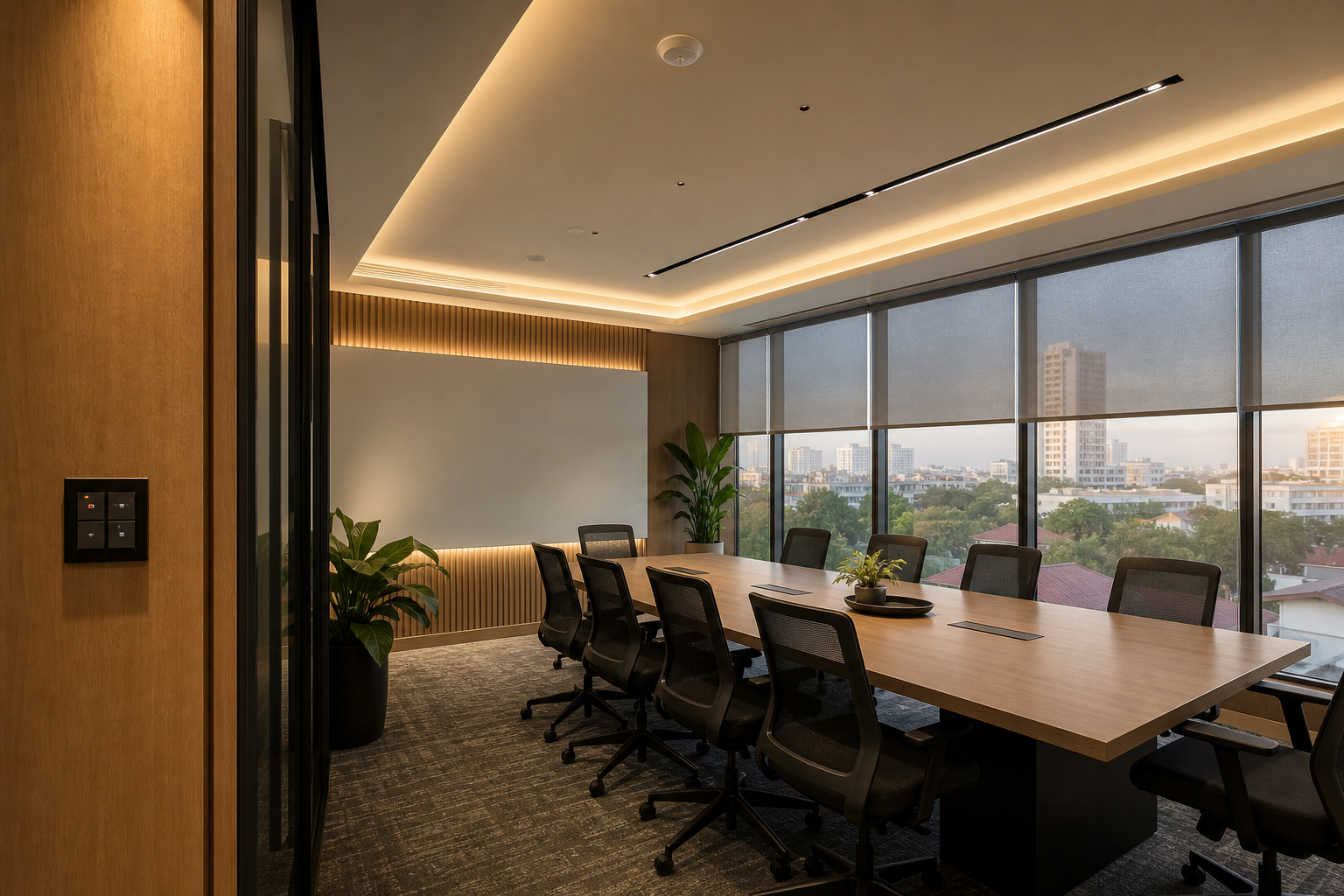
Lighting control begins with understanding the space.
A hotel guest room, residence, office, classroom and public area each require a different control approach. The design should consider how people use the space, which lighting scenes are needed, when automatic control is appropriate and where direct user control remains important.
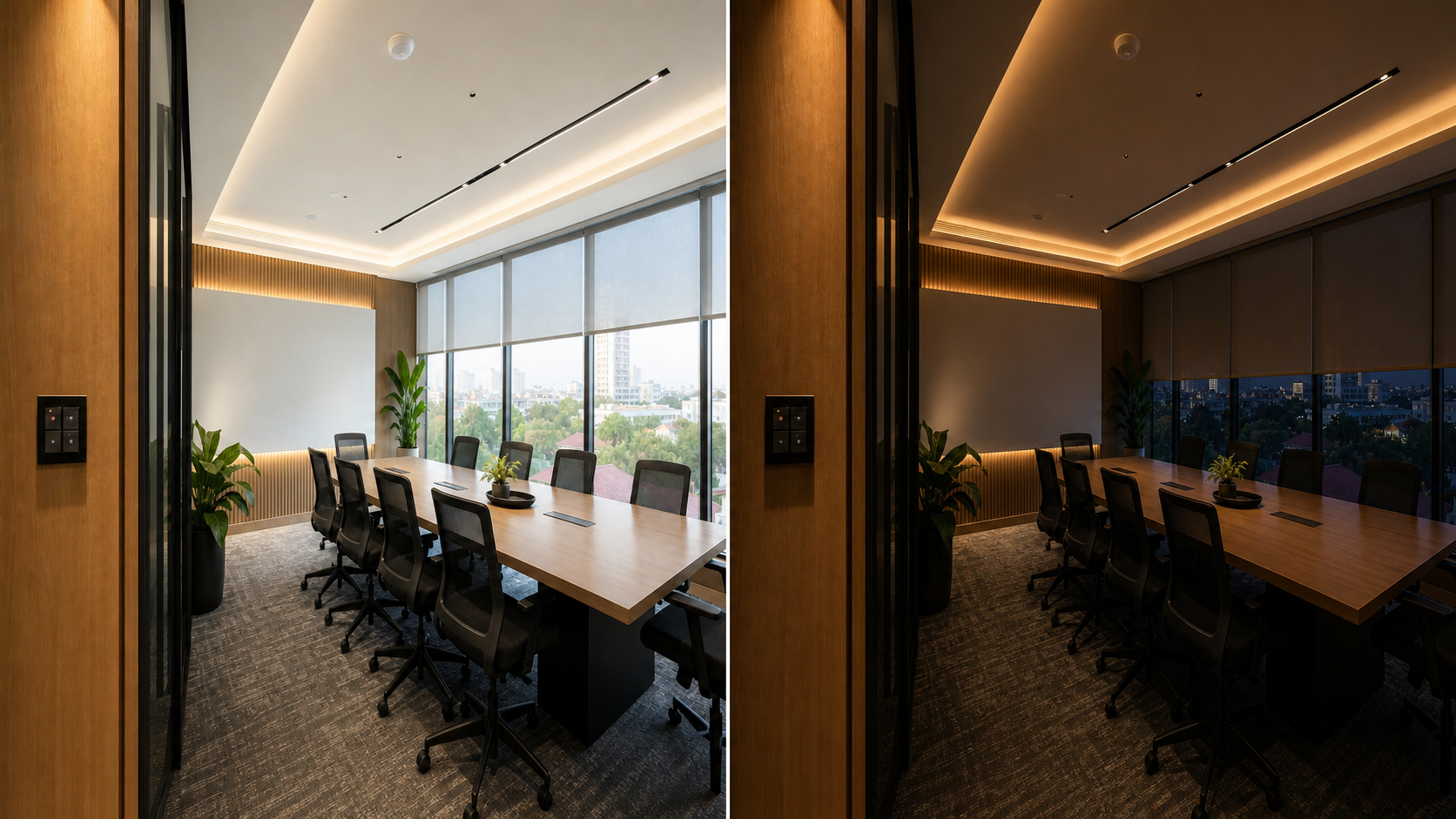
Six coordinated lighting capabilities.
Switching and dimming
Control individual circuits or groups to provide the appropriate lighting level.
Scenes
Recall coordinated lighting settings for different activities or operating conditions.
Presence-based control
Adjust lighting automatically when spaces become occupied or unoccupied.
Daylight response
Use available daylight to adjust artificial lighting where the design permits.
Scheduling
Coordinate lighting operation with building schedules and defined operating periods.
Central monitoring and control
Give authorised operators a clear overview of lighting status and operating commands.
Automation should support people—not frustrate them.
Automatic functions work best when they are predictable and appropriate for the space. Manual controls should remain intuitive, while scenes, sensors and schedules operate in the background according to a clearly defined strategy.
Lighting becomes more useful when it shares information.
Occupancy information, schedules, room operating modes and central monitoring can support both lighting and other building functions. An open, coordinated design reduces unnecessary duplication and gives operators a more consistent view of the building.
Applicable across different building types.
Good lighting control depends on decisions made early.
- Lighting loads, drivers and dimming compatibility
- Circuit, group and scene structure
- Sensor placement and detection behaviour
- User controls, operating logic and future adjustment
These requirements should be coordinated between the lighting designer, electrical designer, controls engineer, integrator and building operator.
Supporting Sustainable Building Targets
See how automation, measurement and performance data can support project objectives under recognised green-building and wellbeing frameworks.
Planning a lighting-control strategy?
Share the building type, space requirements and intended operating approach with GreenControls.