
Connect relevant security information without blurring system responsibilities.
Security integration allows approved status and events to support coordinated building responses while dedicated security systems retain responsibility for their essential functions.
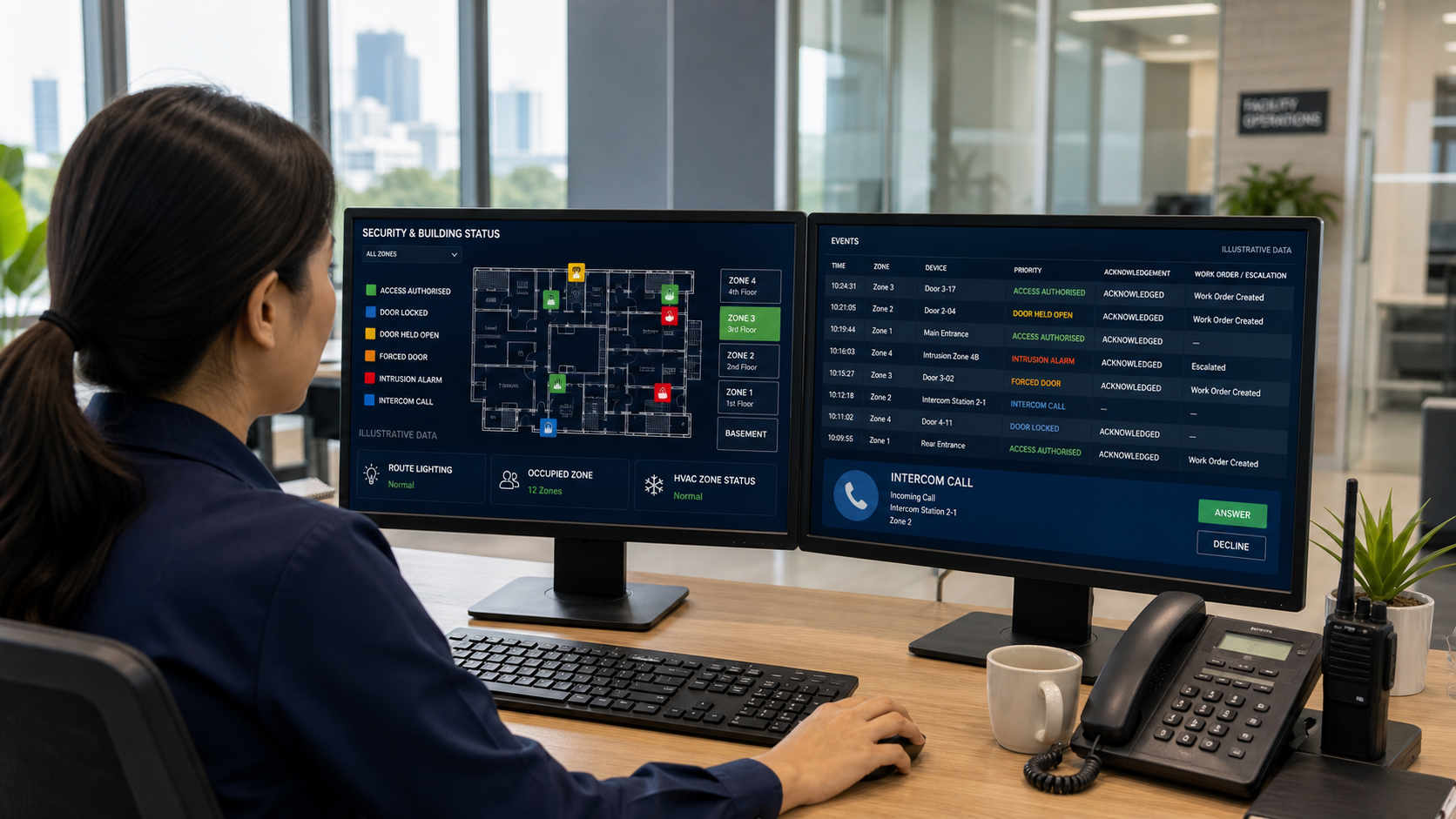
Integration should support coordination—not replace dedicated security control.
Building systems may benefit from selected information such as authorised access status, door conditions, intrusion events or approved operating modes. The required information exchange and permitted responses must be defined carefully for each project.
The security system protects. Integration coordinates authorised information.
Six integration functions to consider.
Access-status integration
Exchange authorised access or door-status information with relevant building functions where approved.
Occupancy-state support
Use suitable access or room-status information to support approved occupancy and building operating modes.
Intrusion-event visibility
Present authorised intrusion-event information to appropriate operators without replacing the dedicated security interface.
Intercom and visitor-status coordination
Exchange defined call, entry or visitor-status information where compatible and approved interfaces are available.
Coordinated building responses
Allow selected lighting, climate or monitoring functions to respond to approved security states according to defined logic.
Operational visibility
Give authorised teams a coordinated view of relevant building and security status while maintaining role-based access.
Approved security states can support appropriate building behaviour.
- 01
Arrival
Authorised access may support suitable lighting, climate or room-preparation functions according to the approved strategy.
- 02
Departure
A defined departure state may return selected functions to suitable standby or economy operation.
- 03
Secured
Selected building functions may follow an approved secured mode while essential services remain available.
- 04
Security event
Approved building responses may support visibility or safe operation without interfering with the security system's dedicated response.
These are project-defined examples, not universal behaviours. Each response must be specified, authorised and tested for the individual project.
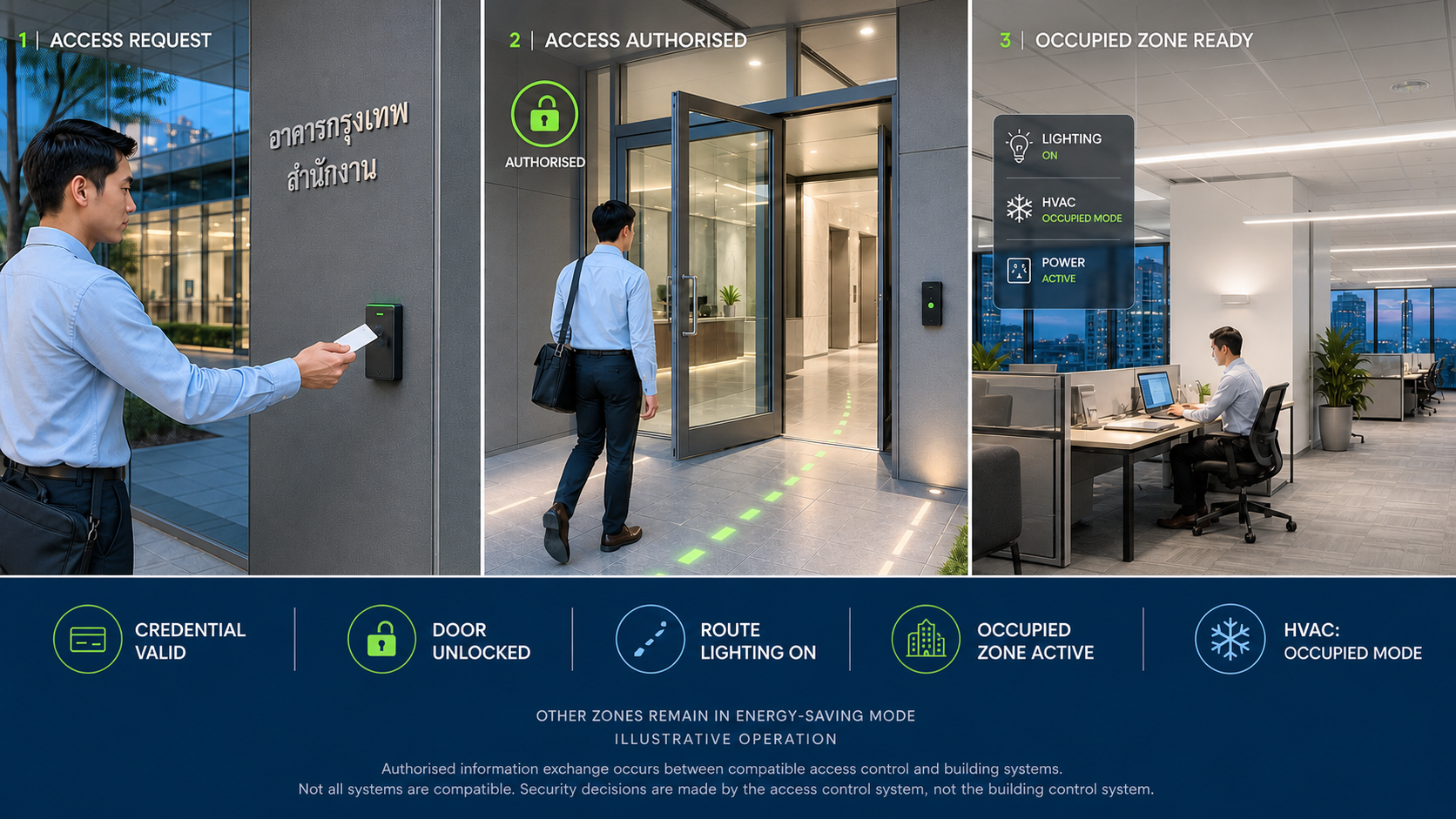
Integration must not compromise certified safety or security functions.
Access control, intrusion detection, fire alarms, emergency systems and other dedicated platforms retain responsibility for their certified or essential functions. Building integration may receive or exchange specifically approved information, but it must respect system boundaries, priorities and required failure behaviour.
Use only the security information required for the intended building function.
Many coordinated building responses require only a defined status or event—not personal identity or detailed movement history. The project should minimise information exchange, restrict access and define appropriate retention and responsibility.
Integration uses defined operational states. It is not intended for facial recognition, identity tracking or personal profiling.
Security-system integration requires controlled technical access.
Interfaces between building and security systems should follow an approved network architecture, defined permissions, secure communication practices and documented operational responsibilities. Remote access should be limited to authorised users and approved methods.
Cybersecurity is a continuing shared responsibility across design, implementation and operation. No arrangement can be described as absolutely secure.
Relevant security states can support coordinated building operation.
Approved status and events may support lighting, climate control, occupancy modes, hospitality operation and building monitoring. Each response must remain explicitly defined, authorised and appropriate to the project.
Security-integration priorities vary by building environment.
Hospitality
Coordinate relevant room, access, service and operational status while respecting guest privacy and hotel responsibilities.
Residential
Support intuitive arrival, departure and secured modes while preserving resident control and privacy.
Commercial
Coordinate relevant access and operational status across offices, tenant areas, shared facilities and building services.
Secure integration begins with clearly defined responsibilities.
- Security objectives and intended building responses
- Dedicated-system responsibilities and certified functions
- Permitted status, events and control requests
- User roles, access permissions and privacy requirements
- Network architecture and cybersecurity responsibilities
- Communication failure and fallback behaviour
- Testing, documentation and operational approval
The strategy should be coordinated with the building owner, security consultant, electrical designer, information-technology team, controls engineer, system integrator and operational representatives.
Planning a clearly defined security-integration strategy?
Share the building type, dedicated security systems, required information exchange and intended building responses with GreenControls.